Getting a Fair Shot Blasting Machine Price: Tips for Indian Procurement Teams
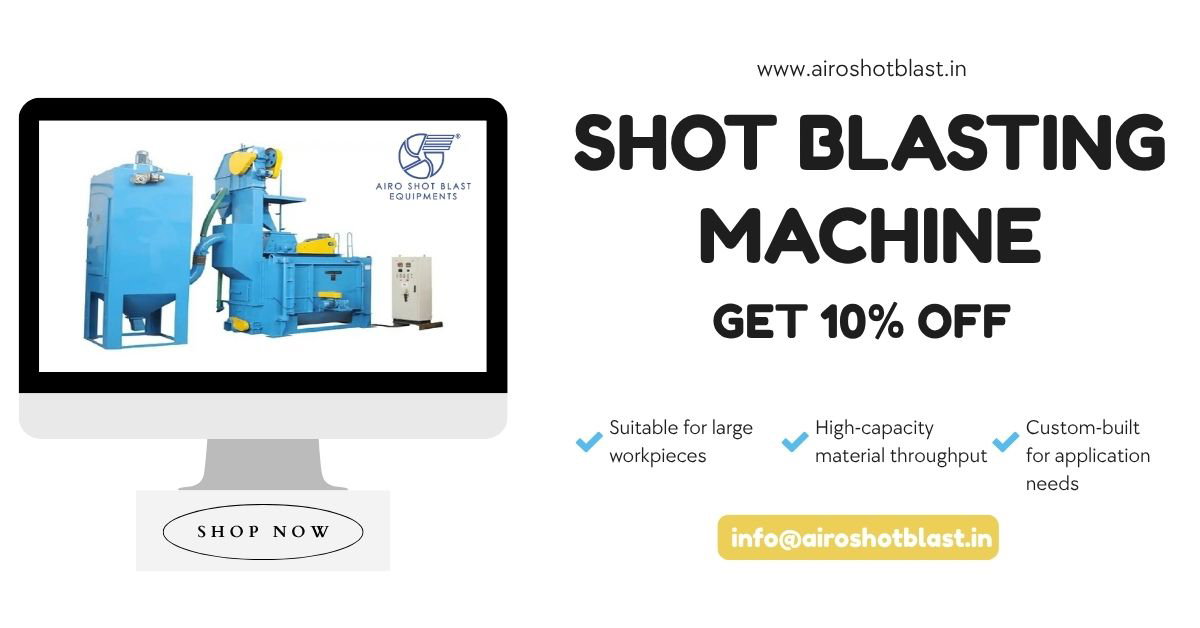
Shot blasting machines are a significant capital investment. Yet most Indian procurement teams finalise prices without a clear framework to evaluate them.That gap costs companies lakhs of rupees every year.
Whether you're buying for a fabrication unit, a railway component workshop, or an auto-ancillary plant, the price you see on a quotation rarely tells the full story.This guide gives your team the tools to change that.
Why Shot Blasting Machine Prices Vary So Widely in India
The Indian market offers machines ranging from ₹5 lakh to ₹1.5 crore and beyond.
That wide range is not random.
Machine type, blast wheel motor capacity, automation level, abrasive recovery system quality, and after-sales support all drive price differences significantly.
A tumblast machine for small castings and a spinner-hanger machine for structural steel are not comparable — even if two vendors quote similar figures on paper.
Many buyers skip this comparison step entirely, which is where overpayment begins.
"In industrial procurement, the specification document is everything. A poorly written spec invites incomparable quotes, and incomparable quotes guarantee either overpaying or under-speccing the machine."
— Ambica Singh, Procurement Head, Heavy Engineering Division
The 5 Questions Every Procurement Team Must Ask Before Comparing Quotes
Getting a fair price starts before you even call a vendor. Your internal team must define what fair means for your specific application.
1. What is the required blast standard?
SA 2.5 (near-white metal) demands more machine power than SA 2.0. Know your required standard before you write the enquiry.
2. What is the component size and throughput volume?
Machine capacity directly determines the price bracket. Under-speccing to save cost causes production bottlenecks within six months.
3. What automation level do you actually need?
Manual, semi-automatic, and fully automated PLC-controlled machines sit in completely different price tiers. Buying more automation than your workflow needs wastes capital.
4. What abrasive media does the machine use?
Steel shot, steel grit, and aluminium oxide have different costs per kg and different wear rates on the machine. Factor this into total cost of ownership, not just machine price.
5. What does after-sales service include?
Blade replacement cycles, wear part availability, and response time commitments affect total operating cost more than the machine's sticker price over a three-year period.See More - https://airoshotblast.blogaaja.fi/2026/06/26/how-rajasthans-shot-blasting-industry-supports-the-railway-sector/
How to Build a Credible Comparison Framework
Once your specification is locked, take enquiries from at least three vendors.
Insist on itemised quotations — motor rating, blast wheel count, cabinet thickness, dust collector capacity, and warranty terms must all appear separately.
Check if the vendor holds BIS certification or ISO 9001 accreditation. In India, this signals manufacturing consistency and gives your finance team a defensible compliance record.
Request reference visits to existing installations. A vendor confident in their product will not hesitate to connect you with active customers.
Avoid vendors who offer steep discounts immediately without understanding your spec. That signals either margin padding on the original quote or a specification mismatch they are hiding.
Where Indian Buyers Consistently Leave Money on the Table
Negotiation in India's capital equipment market follows patterns that experienced procurement professionals recognise — and exploit.
Financial year-end quarters (January to March) see vendors actively clearing inventory. Prices are genuinely negotiable during this window, sometimes by 8% to 15%.Bundling consumables — abrasive media, blast wheels, liners — into the initial purchase order often unlocks better pricing than buying the machine alone.
AMC (Annual Maintenance Contracts) are frequently overpriced when signed at the time of machine purchase. Negotiate AMC terms separately, after delivery and installation, when your team has assessed actual service responsiveness.
Always request a Factory Acceptance Test (FAT) clause in the purchase order. This protects you from receiving a machine that does not perform to quoted specifications.
Ready to Procure Smarter? Start with Your Specification Document
A fair price is not the lowest price. It is the right machine, at a defensible cost, backed by reliable after-sales support.
India's shot blasting industry has strong domestic manufacturers offering global-standard machines at competitive prices — but only procurement teams with clear specifications extract that value.
